For many cross-border sellers, returns have long been the unglamorous end of the operation: something logistics absorbed and few people put on a management slide.
Those days are over.
German trade title e-commerce magazin recently argued that returns management needs to become a “C-level strategic discipline” in 2026. Its example shows why. In a high-return scenario with a 40% return rate, the total cost can reach around €15 per returned package once handling, customer service, lost product value and restocking are included.
That pressure is now being compounded by two developments: new economics for low-value cross-border imports and increasingly demanding marketplace returns requirements.
Together, they raise a simple question: does your current returns network still make economic sense in every market you sell into?
The time to answer that question is before peak season, not during the January returns wave that follows.
1. The end of de minimis changed the maths on cross-border parcels
The duty-free treatment that supported the economics of many low-value cross-border shipments has changed fundamentally in both the US and EU:
– The US suspended duty-free de minimis treatment for shipments valued at $800 or less from all countries in August 2025.
– The EU followed on 1 July 2026, abolishing its €150 customs-duty exemption and introducing an interim €3 customs duty on low-value ecommerce imports. Importantly, the charge applies per item category in a consignment rather than simply once per parcel.
That changes the economics of shipping individual low-value orders into Europe.
Returns make the calculation more painful
For a change-of-mind return, the new €3 EU customs duty paid on the original import is not refunded by customs. Only limited exceptions, such as faulty goods, qualify for repayment.
The return itself does not incur another €3 duty simply by leaving the EU, but the seller has already lost the customs duty paid on the original sale and now has to fund another international logistics leg. Add handling time and the period during which the product cannot be resold, and a low-value return can quickly consume much of the margin on the original order.
Local stock changes the calculation
This also makes the difference between shipping orders one by one across the border and importing inventory in bulk more important.
Goods imported into the EU as commercial inventory are cleared under the normal customs tariff, which depends on product classification, value and origin. Once that inventory is inside the EU, individual orders shipped to EU consumers do not incur the new €3 low-value ecommerce duty.
For many products, that can make bulk import significantly more economical on a per-unit basis than paying the €3 charge order by order. The exact saving depends on the tariff applicable to the product, so it needs to be calculated category by category.
The same logic does not apply in quite the same way in the US. The advantage of bulk importing there lies more in consolidating customs processing and logistics than in automatically achieving a lower tariff rate.
Returns add another reason to keep inventory in-market
A local return hub can prevent each individual return from immediately travelling back across a border. Products can be received, inspected and graded locally, with resellable inventory returned to the sales cycle and other items routed to the appropriate recovery path.
That means fewer unnecessary international movements, faster inventory recovery and less stock sitting unavailable for resale.
2. Marketplaces are making local returns harder to ignore
In their drive to improve the customer experience on their platforms, marketplaces are putting stricter demands on how and where sellers handle returns.
The exact rules differ by platform, and sometimes by country within the same marketplace. But the pressure is similar: cross-border sellers increasingly need a fast, affordable and clearly defined return route in the customer’s market.
Amazon: local returns increasingly affect whether you recover the product at all
Amazon is the clearest example, although its international returns rules differ between markets.
In the US, international Fulfilled by Merchant sellers without a default US return address face automatic returnless refunds for eligible returns worth $25 or less. The customer receives their money back without having to send the product overseas.
For higher-value international returns, sellers without a US return address have to provide an alternative, such as prepaid international return shipping. Since September 2024, they have two days after the return request to provide a compliant solution. If they do not, Amazon may refund the customer on the seller’s behalf and charge the seller account.
Europe follows a similar principle, but the thresholds and deadlines differ.
Sellers fulfilling orders from abroad on Amazon.co.uk, Amazon.de, Amazon.fr, Amazon.es and Amazon.it must provide a domestic return address or offer a returnless refund for low-value items: £20 or less in the UK and €25 or less in the EU marketplaces.
For higher-value international FBM returns, Amazon tightened the rules specifically in Germany and the UK in 2025.
A seller shipping an Amazon.de order from outside Germany, or an Amazon.co.uk order from outside the UK, now has three calendar days after the return request to provide one of three solutions: a domestic return address with a prepaid label, a prepaid international return label, or a full refund without requiring the item back.
Miss that deadline and Amazon may refund the customer at the seller’s expense.
For an international seller, the lack of a local returns setup can therefore turn into a direct inventory and margin risk.
The same pressure appears across other marketplaces
Walmart Marketplace requires sellers in the US to maintain a valid US returns address. P.O. boxes do not qualify.
TikTok Shop is making cross-border European selling much easier through its Sell Across Europe programmes, but returns still have to go somewhere locally. UK sellers selling to EU customers need an EU return destination. If they do not have their own EU return warehouse and the order is not handled as refund-only, TikTok Shop can route the product to a local TikTok Shop return warehouse and pass the processing costs back to the seller.
For EU sellers expanding across TikTok Shop markets, the platform similarly requires sellers to configure their return-warehouse setup as part of their cross-border fulfilment operation.
Kaufland requires sellers to provide an EU return address, while some of its automated return-label services have additional country-specific requirements.
Bol requires free returns for shoppers. Sellers using bol’s own return service need a returns address in the Netherlands or Belgium. Sellers that organise returns themselves have more flexibility over where that address is located.
Cdiscount requires sellers to provide a workable return route for French customers, for example through a French return address or seller-funded international returns.
OnBuy also requires a returns solution in each market sellers enter, either through a local return address or an alternative such as prepaid returns or collection.
PcComponentes requires marketplace sellers to provide a prepaid return label or valid collection solution within 48 calendar hours of a customer’s return or warranty request, excluding weekends and public holidays.
The rules differ, but the commercial issue is much the same. The further a return has to travel, the more expensive, slower and harder to control the process becomes.
What ecommerce leaders should check before Q4
Before peak season, map your returns operation by market and sales channel instead of treating international returns as one global process. Start with five questions:
1.Where are returns actually going? Identify every market where a customer return still crosses an international border before it can be inspected.
2.What does a return really cost? Include return transport, customs costs, customer service, handling, processing and markdown or write-off, not just the carrier label.
3.How long is returned stock unavailable? Measure the time between the customer initiating a return and the product becoming sellable again.
4.Are your marketplace setups compliant? Check return-address, label, refund and response-time requirements marketplace by marketplace and country by country.
5.What happens after inspection? Define clear rules for restocking, refurbishment, consolidation, liquidation, donation or disposal so returned products do not simply become stranded inventory.
Four KPIs give management a useful starting point: cost per return, days from return request to resale, percentage of returned inventory recovered at full value, and percentage of returns that cross an international border.
Those numbers also show where local returns infrastructure is likely to have the biggest impact.
From international returns to local inventory recovery
A central international returns warehouse can still make sense in some markets and for some products. But sending every returned item back across a border to the same location is becoming harder to justify.
A local returns hub can reduce international transport and handling, shorten inventory recovery times and help sellers meet marketplace return requirements. The important point is that returns are not only about getting a parcel back. They are about getting as much value as possible back out of the product.
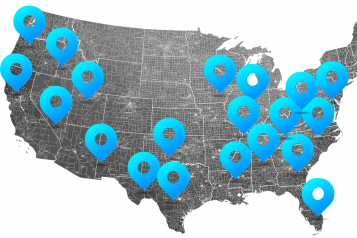
That is what Salesupply’s international returns network is built around: 20 local returns locations connected through a single IT integration, with products received, inspected and graded in-market before the next disposition decision is made.
Cross-border returns have always been a cost of doing business. What has changed is how quickly that cost can build through customs, marketplace rules and slow inventory recovery.
If returns are quietly eating into your international margin, now is the time to map the problem and put the right local setup in place before peak volumes turn into January returns.
Talk to Salesupply about where local returns would make the biggest difference in your cross-border setup.